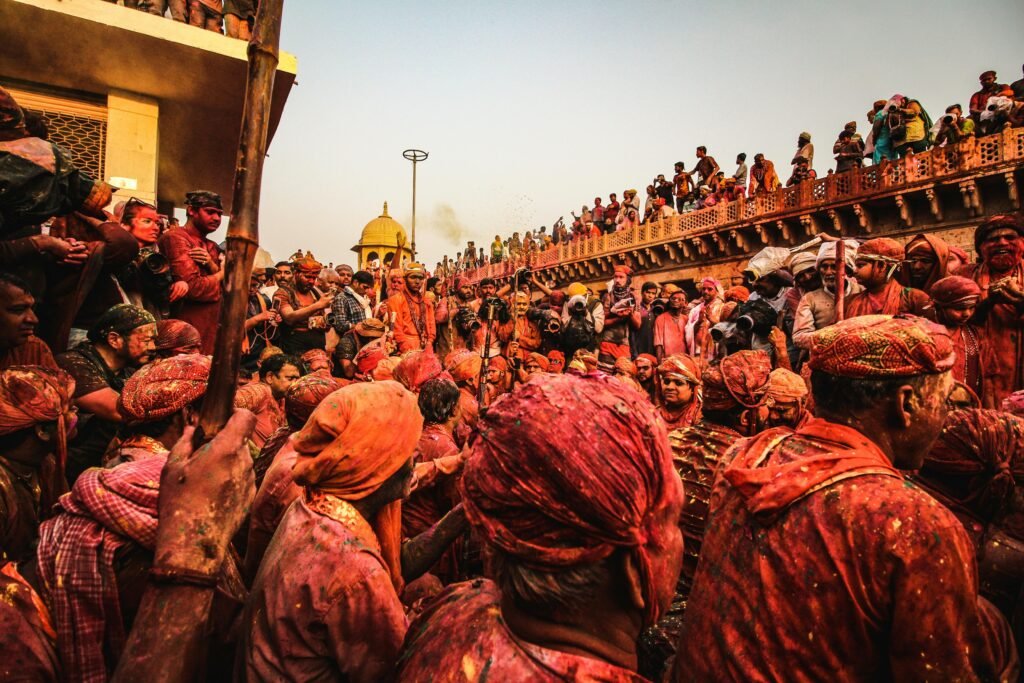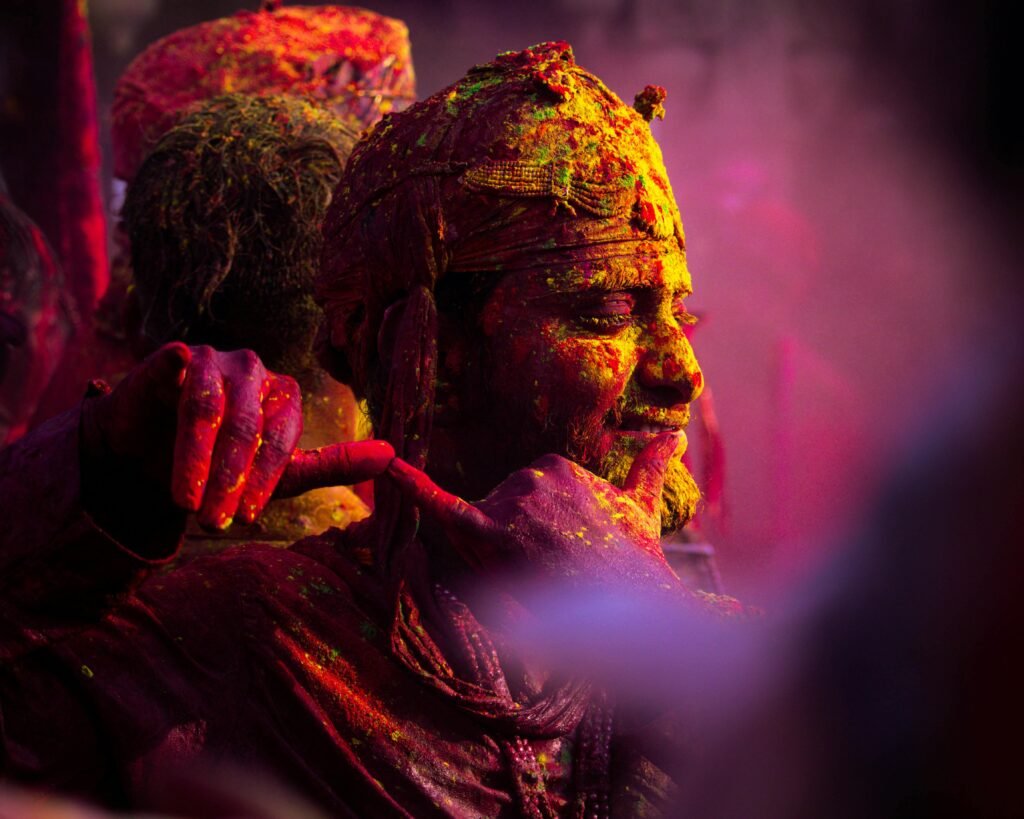
The Nashik–Trimbakeshwar Simhastha Kumbh Mela 2027 is one of India’s significant Hindu pilgrimage gatherings, bringing devotees, saints, sadhus and spiritual seekers to the sacred banks of the Godavari River in Maharashtra.
Centred on the two pilgrimage towns of Nashik and Trimbakeshwar, the Simhastha Kumbh Mela is associated with sacred bathing, temple darshan, religious processions and centuries-old spiritual traditions.
Whether you are planning your first pilgrimage, preparing for an Amrit Snan, visiting Trimbakeshwar Jyotirlinga or exploring Nashik’s religious heritage, advance planning can make your experience more meaningful and manageable.
This complete guide covers the Nashik Kumbh Mela 2027 dates, sacred bathing locations, important temples, travel options, accommodation planning and essential safety tips.
Main bathing period
August–September 2027, according to the currently published interim schedule.
Main pilgrimage centres
Nashik and Trimbakeshwar, Maharashtra.
Sacred river
Godavari River.
What is the Nashik–Trimbakeshwar Kumbh Mela?
Kumbh Mela is a major Hindu pilgrimage tradition in which devotees gather for sacred bathing, worship, spiritual discussion and encounters with religious communities.
The Nashik edition is known as Simhastha Kumbh Mela. Its religious significance is associated with the Godavari River, the spiritual geography of Trimbakeshwar and traditional astrological timing.
The event is distinctive because its principal religious activities take place across two centres: Nashik and Trimbakeshwar. Both have their own sacred bathing locations and temple traditions.
For pilgrims, the Mela can be an opportunity to participate in ritual bathing, seek blessings, visit temples, observe akhada traditions and spend time in prayer.
Nashik Kumbh Mela 2027 dates and schedule
The first-edition plan published by the Nashik–Trimbakeshwar Kumbh Mela Authority lists the following key dates. The authority’s plan is interim, so verify the latest official announcements before finalising travel.
| Event | Date in the published interim plan |
|---|---|
| Dhwajarohan — ceremonial flag hoisting | 31 October 2026 |
| First main Amrit Snan / Shahi Snan | 2 August 2027 |
| Second main Amrit Snan / Shahi Snan | 31 August 2027 |
| Third main bathing observance — Nashik | 11 September 2027 |
| Third main bathing observance — Trimbakeshwar | 12 September 2027 |
| Closing ceremony listed for Trimbakeshwar | 24 July 2028 |
| Closing ceremony listed for Nashik | 29 July 2028 |
Source: the published schedule based on the authority’s Kumbh Mela Plan. The plan states that it is subject to revision, and exact bathing times and operational instructions must be confirmed separately.
Important: Do not confuse the opening ceremony in October 2026 with the main bathing dates in 2027. They are different milestones within the wider Simhastha period.
For the latest information, check the official Nashik Kumbh Mela website and the Nashik–Trimbakeshwar Kumbh Mela Authority.
Why are Nashik and Trimbakeshwar both important?
The Nashik–Trimbakeshwar Simhastha is not limited to one ghat or temple. Its two principal centres have different but complementary religious roles.
1. Ramkund, Nashik
Ramkund is a sacred bathing site on the Godavari River in Nashik’s Panchavati area. It is associated with Lord Rama in local religious tradition and is an important destination for ritual bathing and ancestral rites.
During the Kumbh Mela, devotees may visit the ghats for prayer and sacred bathing in accordance with the arrangements announced by the authorities.
2. Kushavarta Kund, Trimbakeshwar
Kushavarta Kund is a sacred bathing tank in Trimbakeshwar, close to the Trimbakeshwar Jyotirlinga Temple. It is one of the principal ritual centres of the Simhastha pilgrimage.
Nashik and Trimbakeshwar also have different traditional bathing centres for religious orders. The Nashik district administration describes Vaishnav akhadas as bathing at Nashik, while Shaiva and other ascetic groups have their centre at Trimbakeshwar.
Important temples and places to visit
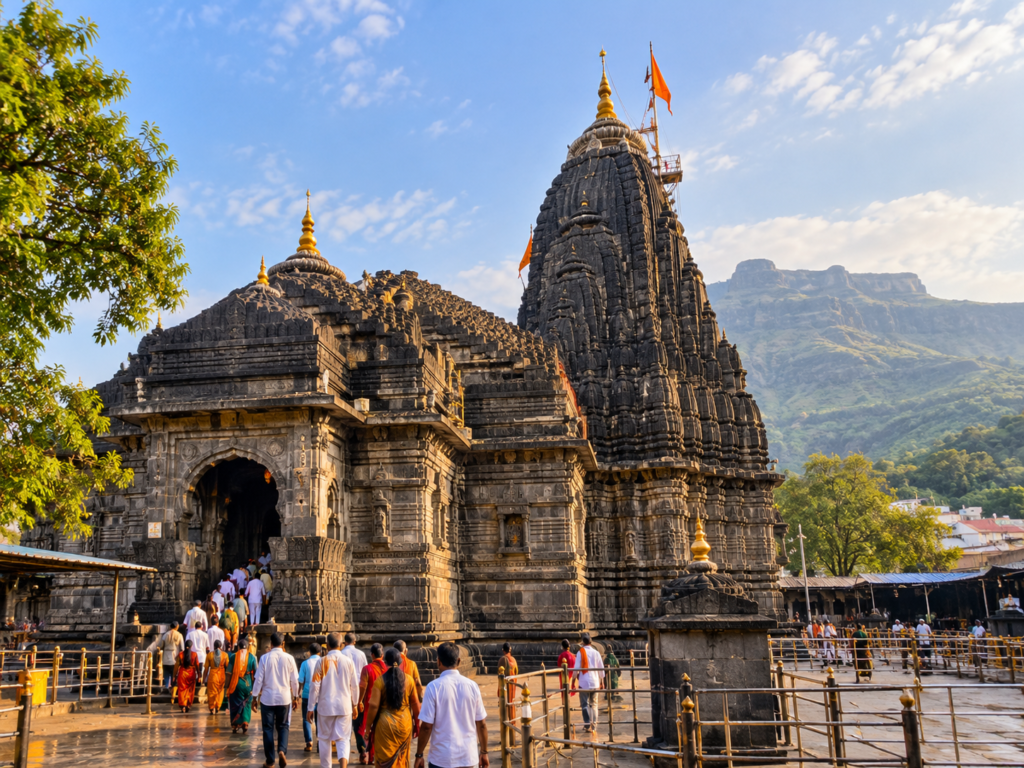
1. Trimbakeshwar Jyotirlinga Temple
Trimbakeshwar is home to one of the twelve Jyotirlinga shrines of Lord Shiva. Located near the Brahmagiri hills, the temple is an important spiritual destination in its own right and a central part of the Simhastha pilgrimage. It is approximately 28–30 km from Nashik city.
Check the temple trust’s latest darshan instructions and plan extra time for queues.
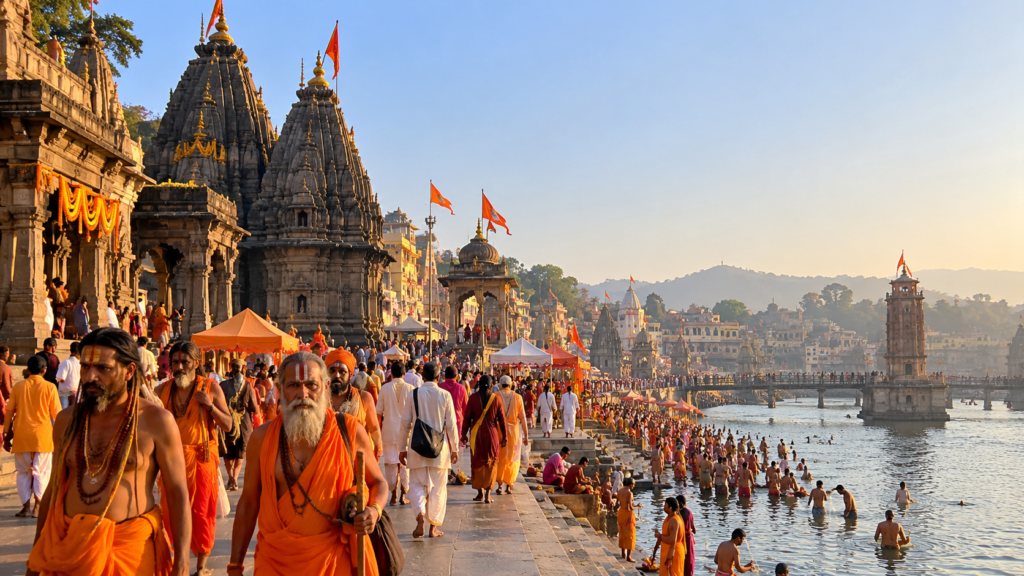
2. Ramkund and the Godavari ghats
Ramkund is one of the best-known sacred places in Nashik. Visitors come to pray, perform religious rites and experience the city’s long association with the Godavari River.
Use designated access routes and follow bathing restrictions during busy periods.

3. Kushavarta Kund
This sacred tank is an essential stop for devotees visiting Trimbakeshwar during Simhastha. Access, bathing arrangements and crowd restrictions can change during major observances, so check the latest official notices.

4. Panchavati, Kalaram Temple and Sita Gufa
Panchavati is a historic religious area associated with the Ramayana tradition. Visitors often explore the Kalaram Temple area, Sita Gufa and nearby shrines alongside Ramkund, depending on crowd conditions and opening arrangements.

5. Brahmagiri Hills
Brahmagiri is closely associated with the religious geography of Trimbakeshwar and the Godavari’s source region. If visiting walking routes or viewpoints, check local access and weather conditions, especially during the monsoon.
What can devotees expect during Simhastha Kumbh Mela?
The experience extends beyond the bathing ghats. Depending on the programme and local arrangements, pilgrims may encounter:
- Amrit Snan and Shahi Snan: major bathing observances that attract large numbers of devotees.
- Akhada traditions and processions: ceremonial activities involving religious orders, sadhus and mahants.
- Temple darshan: opportunities to visit Trimbakeshwar Jyotirlinga, Panchavati and other sacred sites.
- Spiritual gatherings: religious discourses, devotional singing, prayers and community activities.
Programmes, access areas and procession times should be confirmed through official notices. Do not rely on unofficial social media posts for time-sensitive arrangements.
How to reach Nashik for Kumbh Mela 2027
By train
Nashik Road railway station is a common arrival point for visitors travelling by rail. Plan the transfer to your accommodation or designated Mela transport point in advance, and allow additional time for crowd management and traffic diversions.
By air
Ojhar Nashik Airport is approximately 24 km from central Nashik, according to the district administration. Check current flight availability and onward transport before booking.
By road
Nashik is connected by road to other parts of Maharashtra and neighbouring states. Trimbakeshwar is around 28–30 km from Nashik city, although journey times can increase considerably during the pilgrimage.
Before travelling by car or taxi, check traffic diversions, parking instructions, shuttle services and restricted-access areas. Do not assume a private vehicle can reach the ghats or temple entrance.
Accommodation and planning tips
A little preparation can make a significant difference during a large pilgrimage.
- Choose your priority location. Decide whether Ramkund in Nashik or Trimbakeshwar Temple and Kushavarta Kund are the main focus of your visit.
- Book flexible accommodation. Prefer cancellable reservations until the date-specific travel and access instructions are clear.
- Monitor official announcements. Check the official Kumbh Mela website and the Nashik Divisional Commissioner’s portal frequently.
- Allow extra time. Avoid trying to visit every temple and bathing centre in one day.
- Prepare for monsoon weather. Carry rain protection, suitable footwear and a waterproof pouch for medicines and documents.
- Verify religious services. For specific pujas or ancestral rites, consult the relevant temple trust or a properly verified local provider. Be cautious of unofficial intermediaries requesting advance payment.
Safety tips for pilgrims
Safety should be part of every Kumbh Mela plan, particularly on major bathing days.
- Follow police instructions, barricades, signs and designated entry and exit routes.
- Enter the river only at authorised bathing locations and during permitted periods.
- Agree on a meeting point with family members in case you become separated.
- Keep essential medicines, identification, a charged mobile phone and emergency contact details with you.
- Take extra care with children, older adults and visitors who have mobility limitations.
- Locate official medical assistance and help facilities when you arrive.
- Respect temple rules, local customs and photography restrictions.
- Keep the Godavari and surrounding public spaces clean.
Visitors with older family members or young children should check access routes, toilet locations, shuttle drop-off points and medical facilities before finalising the itinerary.
Frequently asked questions
When does the Nashik–Trimbakeshwar Kumbh Mela 2027 begin?
The currently published interim plan lists 31 October 2026 for the ceremonial flag hoisting at Nashik and Trimbakeshwar. Check the official authority’s updates for any changes.
What are the main Amrit Snan dates for Nashik Kumbh Mela 2027?
The published interim schedule lists 2 August and 31 August 2027, followed by a main bathing observance on 11 September in Nashik and 12 September in Trimbakeshwar. Confirm the schedule and exact timings before travelling.
DigiKumbh
Where does the holy dip take place?
The two principal bathing centres are Ramkund on the Godavari River in Nashik and Kushavarta Kund in Trimbakeshwar. Follow local authority instructions about designated bathing areas.
Why is Trimbakeshwar important during Kumbh Mela?
Trimbakeshwar is home to one of the twelve Jyotirlinga shrines of Lord Shiva and is a major religious centre of the Nashik–Trimbakeshwar Simhastha.
How far is Trimbakeshwar from Nashik?
Trimbakeshwar is approximately 28–30 km from Nashik city. Travel time during the Mela may be longer because of crowds, road diversions and shuttle arrangements.
Which railway station should visitors use?
Nashik Road railway station is a common rail arrival point for Nashik. Check current train schedules and the official transport plan for your arrival date.
Is the 2027 Kumbh Mela schedule final?
The dates are listed in an interim plan that may be revised. Confirm dates, bathing times and restrictions through the official authority before making non-refundable plans.
Final thoughts
The Nashik–Trimbakeshwar Simhastha Kumbh Mela brings together devotion, sacred river traditions, temple heritage and the living practices of India’s religious communities.
Understanding the significance of Ramkund and Kushavarta Kund, planning visits to important temples and following the latest official instructions can help pilgrims make their journey safer and more meaningful.
For the latest announcements, visit the official Nashik Kumbh Mela website and the Nashik–Trimbakeshwar Kumbh Mela Authority.
Editorial note: This guide was prepared on 27 October 2026. It is an independent visitor guide, not an official government publication. The event schedule may change.